Content Note:
This post discusses addiction, trauma, and mental health. Please read with care and pause as needed.
In the Realm of Hungry Ghosts: Why This Conversation Still Matters
This weekend, I have the privilege of hearing Dr. Gabor Maté speak at a conference, and I genuinely feel excited in the way that only therapists and deep feelers understand. The lean-forward in your seat kind of excited. The kind that reminds you why you chose this work in the first place.
One of Dr. Maté’s most influential books, In the Realm of Hungry Ghosts, profoundly shaped the way I understand addiction; not as a moral failing, a lack of willpower, or a character flaw, but as a human response to pain.
And that shift matters. More than ever.
Addiction Is Not the Root, but the Adaptation
At the core of In the Realm of Hungry Ghosts is a simple but radical reframe:
The question is not “Why the addiction?” but “Why the pain?”
Dr. Maté invites us to see addiction as a coping strategy, often the best one available to a nervous system shaped by trauma, neglect, chronic stress, or unmet emotional needs. Substances, behaviors, compulsions… these are not random choices. They are attempts to self-soothe, to regulate, to survive.
When we view addiction this way, shame begins to loosen its grip.
Trauma Lives in the Body
One of the most powerful themes in the book is how trauma (especially developmental and relational trauma) becomes embedded in the body and nervous system. Long before someone ever reaches for a substance, their system may already be wired for hyper-vigilance, dissociation, or emotional numbing.
Addiction, then, becomes less about seeking pleasure and more about relief. Relief from unbearable internal states. Relief from memories the body hasn’t forgotten. Relief from the ache of disconnection.
This perspective doesn’t excuse harm, but it explains it. And explanation opens the door to healing.
Compassion Is Not Enabling
A common fear is that compassion somehow “lets people off the hook.” Dr. Maté challenges this binary thinking. Compassion is not the absence of accountability. It is the presence of understanding.
When people feel seen rather than judged, their nervous systems soften. When shame decreases, capacity increases. When we stop pathologizing survival strategies, we create space for real change.
This is true in addiction work, and honestly, it’s true in all mental health work.
Why This Still Feels Urgent
We live in a culture that is chronically dysregulated, disconnected, and overwhelmed; yet we are quick to label symptoms without addressing root causes. Dr. Maté’s work is a reminder that healing is relational, that curiosity is more powerful than criticism, and that the body keeps the score long after the mind tries to move on.
As a therapist, this lens reinforces something I believe deeply: people are not broken. Their systems adapted to what they were given. And with safety, compassion, and support, systems can learn new ways to be.
I’m looking forward to hearing Dr. Maté speak, not just as a clinician, but as a human being who knows that pain asks to be witnessed before it can be released.
Here’s to conversations that soften us, challenge us, and remind us why empathy is not optional. It’s essential.
Holding space,
LC
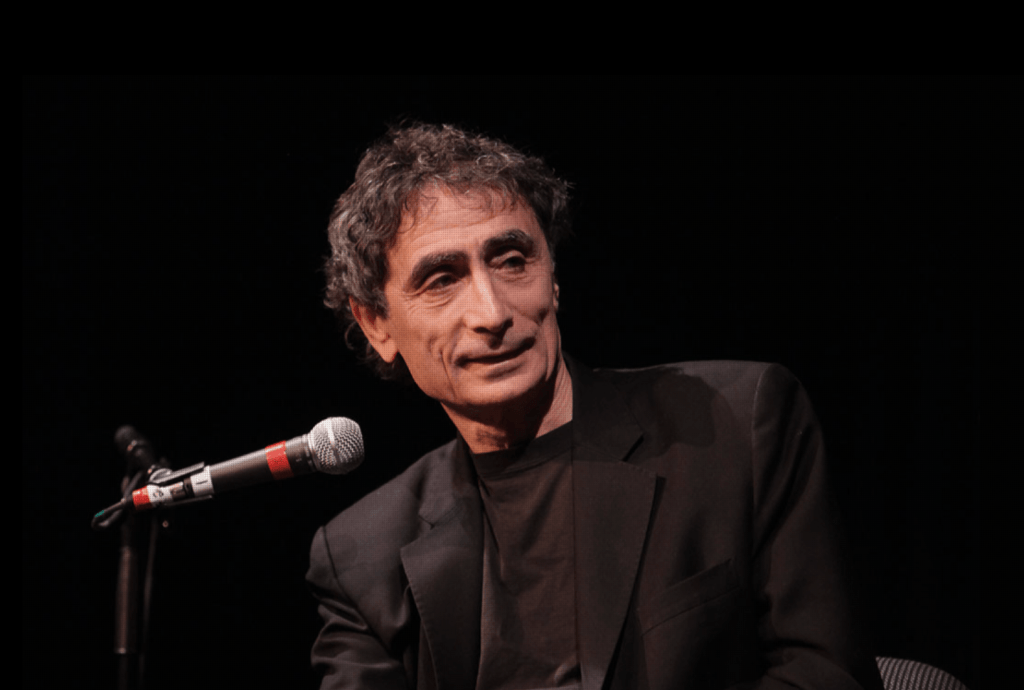
Dr. Gabor Maté is a Hungarian-Canadian physician, speaker, and bestselling author known for his pioneering work on trauma, addiction, and mind-body health. Drawing from decades of clinical experience, he reframes addiction not as a moral failing or lack of willpower, but as an adaptive response to unresolved trauma and emotional pain. His work emphasizes compassion, curiosity, and trauma-informed care as essential foundations for healing. Dr. Maté is the author of several influential books, including In the Realm of Hungry Ghosts, and is internationally recognized for challenging conventional approaches to mental health and addiction treatment.
Resources & Support
If you or someone you love is struggling with addiction, you are not alone. Support is available. Healing begins with compassion, connection, and asking for help.
- SAMHSA National Helpline
Call 1-800-662-HELP (4357) — free, confidential, 24/7 support and treatment referrals for substance use and mental health concerns. - 988 Suicide & Crisis Lifeline
Call or text 988 for immediate emotional support during moments of distress or crisis. - FindTreatment.gov
A confidential directory to locate substance use and mental health treatment options in the U.S.
Support for Loved Ones:
- Al‑Anon — Support for families and friends affected by alcohol use.
- Nar‑Anon — Support groups for loved ones of those struggling with addiction.
- SMART Recovery Family & Friends — Science-based tools and community support for families.
 Vibe with Me LC