Integrity Over Impressions
When I was younger, I’ll admit — I used to be impressed by status. Titles, accomplishments, and appearances seemed to carry so much weight. If someone had the right job, drove the right car, or moved in the right circles, it felt like proof of their worth. But as I matured, I began to realize something deeper: none of that tells me who a person really is. Over time, I stopped caring about who you are on paper or what you own. Because none of it matters if you lack integrity.
Money can’t buy class. Status can’t buy character. What truly matters is how you treat people — not just when it’s easy or convenient, but in the moments when no one is watching and there’s nothing to gain. That’s where character is revealed.
As both a human being and someone who understands how self-worth shapes our lives, I’ve seen how our self-esteem influences the boundaries we set. When your confidence is low, it’s easy to rationalize bad behavior. You make excuses for someone’s mistreatment — telling yourself they’re just stressed, or they didn’t mean it that way. Often, this slips into patterns of codependency, where your focus shifts to fixing, pleasing, or excusing the other person instead of honoring your own needs.
But here’s the truth: you are already a whole and complete person. You don’t need someone else to validate your worth. Anyone who is in your life should be adding value — not material value, but emotional and spiritual value. They should uplift, not drain. Encourage, not diminish. Walk beside you, not run you over.
From a therapeutic perspective, this is the work of self-esteem: learning to recognize that being treated with respect isn’t a luxury — it’s a baseline. When you stop being impressed by surface-level achievements and start paying attention to who someone is, you claim your power back. You stop settling for relationships that chip away at your dignity, and you choose to invest only in those that honor it.
That shift is not just maturity — it’s freedom.
It doesn’t matter if it’s your boss, your mother, your best friend, your partner, your neighbor, or someone you’re on a second date with—no one is entitled to mistreat you. It doesn’t matter how you know them, how long you’ve known them, or whether or not there is love involved. The love needs to be healthy, or it will make you sick.
So stop settling. Stop making excuses for poor treatment. Do better for yourself. Because at the end of the day, the way people treat you should never fall below the standard of respect you know you deserve.
Therapist Takeaways: Raising Your Standard of Respect
- Notice when you’re making excuses. If you find yourself justifying someone else’s behavior, pause and ask: Would I accept this from anyone else?
- Check for patterns of codependency. Are you prioritizing their needs, moods, or validation over your own well-being? That’s a red flag.
- Ask yourself: “Does this relationship uplift me?” Healthy connections add energy, encouragement, and peace — they don’t leave you drained.
- Remember: you are whole. You don’t need another person to complete you. The right relationships will complement your life, not deplete it.
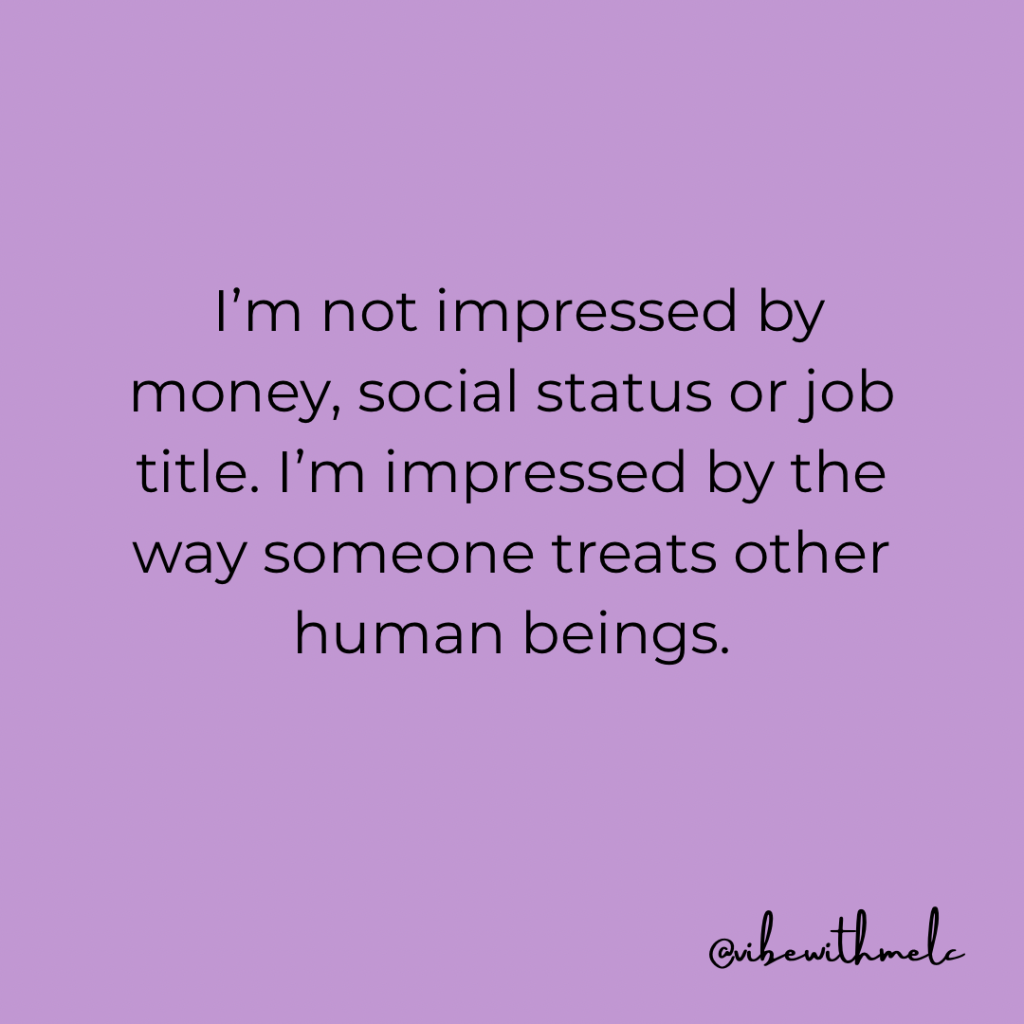
Respect is non–negotiable — start with yourself.
–LC
 Vibe with Me LC